Water tanks fail quietly. A leaking joint, a seized float valve, a blocked vent or a corroded tie rod does not announce itself; it shows up months later as water damage, a bacteriological failure or a tank that cannot hold its level. A written maintenance checklist turns those slow failures into routine findings.
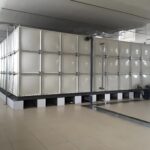
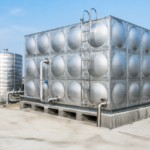
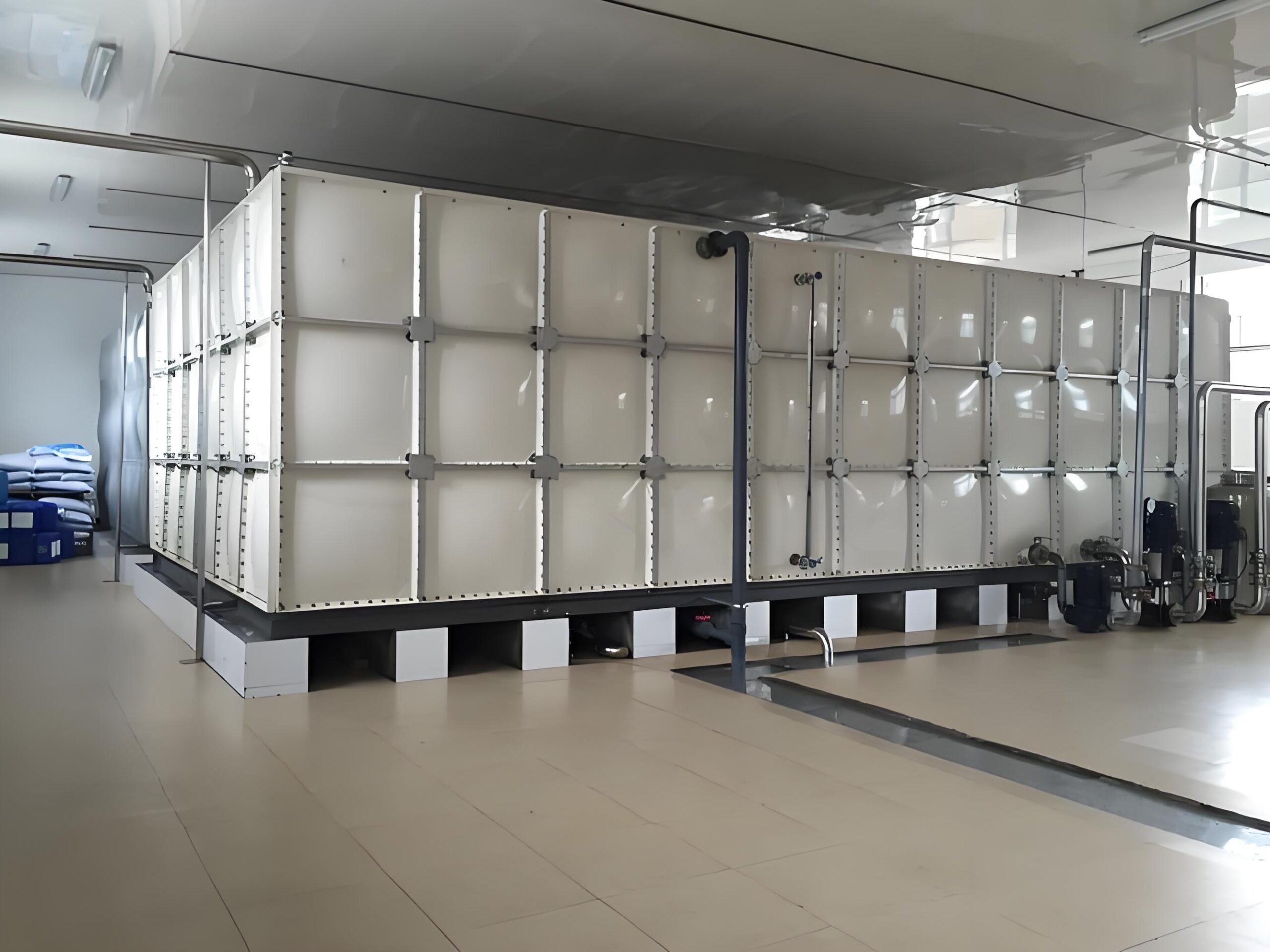
What follows is the checklist we recommend to building operators, arranged by interval. It suits GRP/SMC, stainless steel and coated steel sectional tanks. It is written for facilities teams rather than contractors, so the language is deliberately practical — and as a water tank manufacturer we would rather a client followed a simple routine than an elaborate one they never get round to.
Monthly Checks
- Water level — confirm the tank is at its normal operating level, and that any level indicator or BMS reading agrees with a physical check.
- Leaks — inspect the tank exterior, the base, the pipework connections and the plant room floor for damp patches, staining or standing water.
- Overflow and warning pipes — confirm they are clear and discharging where they should. An overflow running continuously is a failed inlet control.
- Inlet valve operation — check the float valve or level control opens and closes correctly and is not passing.
- Visible contamination — with the hatch open, look for insects, debris on the water surface, unusual colour or odour.
- Access and security — the manway cover is fitted, locked and sealed; vents and screens are intact.
Six-Monthly Checks
- Internal visual inspection — with the tank isolated and drained to a safe level, inspect walls, floor, roof underside, joints and sealant for sediment, cracking, blistering, staining or damaged sealant (confined space procedures apply).
- Tie rods and bracing — check for corrosion, loosened fixings and any sign of wall deflection or bulging.
- Structural condition — look for settlement at the base, movement of the tank on its slab, and cracking around the base fixings.
- Insulation and cladding — panels intact, no gaps, no water ingress behind the insulation.
- External coatings — on coated or galvanized tanks, look for scratches, chalking, rust bloom or coating breakdown, and touch up as specified.
- Pipework supports — confirm external pipework is still independently supported and no load has been transferred to the tank wall.
- Valves — operate every isolation, drain and non-return valve through a full cycle.
Annual Tasks
- Full clean and disinfection — for potable water, the standard annual activity: drain, remove sediment, clean and chlorinate (see our separate guide to the cleaning procedure).
- Bacteriological sampling — after disinfection and before returning to service.
- Level control and alarms — test high-level, low-level and overflow alarms end to end, including any BMS signal.
- Anti-vortex and outlet fittings — inspect for damage, blockage or corrosion.
- Vent screens and insect mesh — replace if deteriorated.
- Fasteners and sealant — spot-check bolt torque on accessible joints and renew any sealant that has hardened or separated.
- Fire reserve verification — where the tank holds fire water, confirm the reserve is intact and that the protected outlet arrangement functions as designed.
- Log review — compare the year’s readings and findings against the previous year to spot trends.
Records That Should Be Kept
A maintenance programme is only credible if it is documented. Keep:
- Date and findings of every inspection, with photographs of any defect.
- Cleaning and disinfection records: dose, contact time, flushing and sample results.
- Water sample certificates.
- Repair and modification history, with the materials used.
- As-built drawings, so future work knows where outlets, tie rods and pipework actually are.
Where the tank serves potable water or a fire system, this log is normally part of the building’s compliance evidence and may be requested by an inspector or an insurer.
Warning Signs That Need Immediate Action
- Water appearing around the tank base with no obvious pipework source.
- Visible bulging of a tank wall — a structural restraint issue, not a cosmetic one.
- Persistent discolouration, taste or odour complaints from building users.
- Bacteriological results that fail the required standard.
- A tank that will not hold its level overnight with the outlets closed.
- Rust streaks on a coated or galvanized tank, indicating coating failure.
Any of these should trigger an engineer’s inspection before the next scheduled visit.
Extending the Interval by Design
Tanks that are easy to maintain get maintained. Three design decisions change the burden dramatically:
- Access — a properly sized manway, internal ladder and adequate headroom. Without them, every inspection becomes a project.
- Material — smooth, non-porous internal surfaces accumulate less biofilm, so cleaning is faster and less frequent.
- Layout — clear space around the tank for inspection, and pipework routed so connections can be reached without dismantling anything.
Our GRP water storage tanks are specified with these points in mind; the small additional up-front cost of proper access is recovered in the first few years of maintenance.
Frequently Asked Questions
Who should carry out tank maintenance?
Monthly visual checks are well within the capability of a trained facilities technician. Internal inspection, cleaning and disinfection of potable water tanks are normally carried out by a specialist contractor, both because of confined space risk and because the disinfection must be certified.
What does a maintenance contract typically cover?
Standard cover includes six-monthly inspections, an annual clean and disinfection, water sampling and a written report. Structural repairs, panel replacement and coating work are normally quoted separately.
Is a formal risk assessment required?
Yes, before anyone enters a tank. Water tank interiors are confined spaces, and the assessment must cover access, atmospheric testing, isolation of all inlets, rescue arrangements and the competence of the people involved.
How do I know when a tank is beyond economic repair?
Repeated leaks at the same joints, widespread coating failure, structural deflection or a series of failed samples are the usual indicators. At that point the question becomes replacement, and a modular replacement can often be installed into the same plant room. Any GRP panel tank supplier can assess the tank and give a repair-versus-replace view.
Summary
Check the basics monthly, inspect inside every six months, clean and sample annually, and keep the records. A commercial water tank maintained on that cycle will comfortably reach the upper end of its design life — and the failures that do occur will be found while they are still small.
Need spare parts, replacement panels or a maintenance specification for your tanks? Get in touch and we will supply the drawings and component details for your installation.