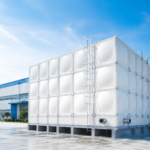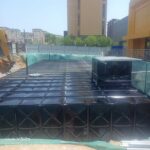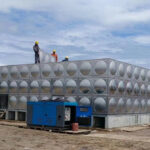
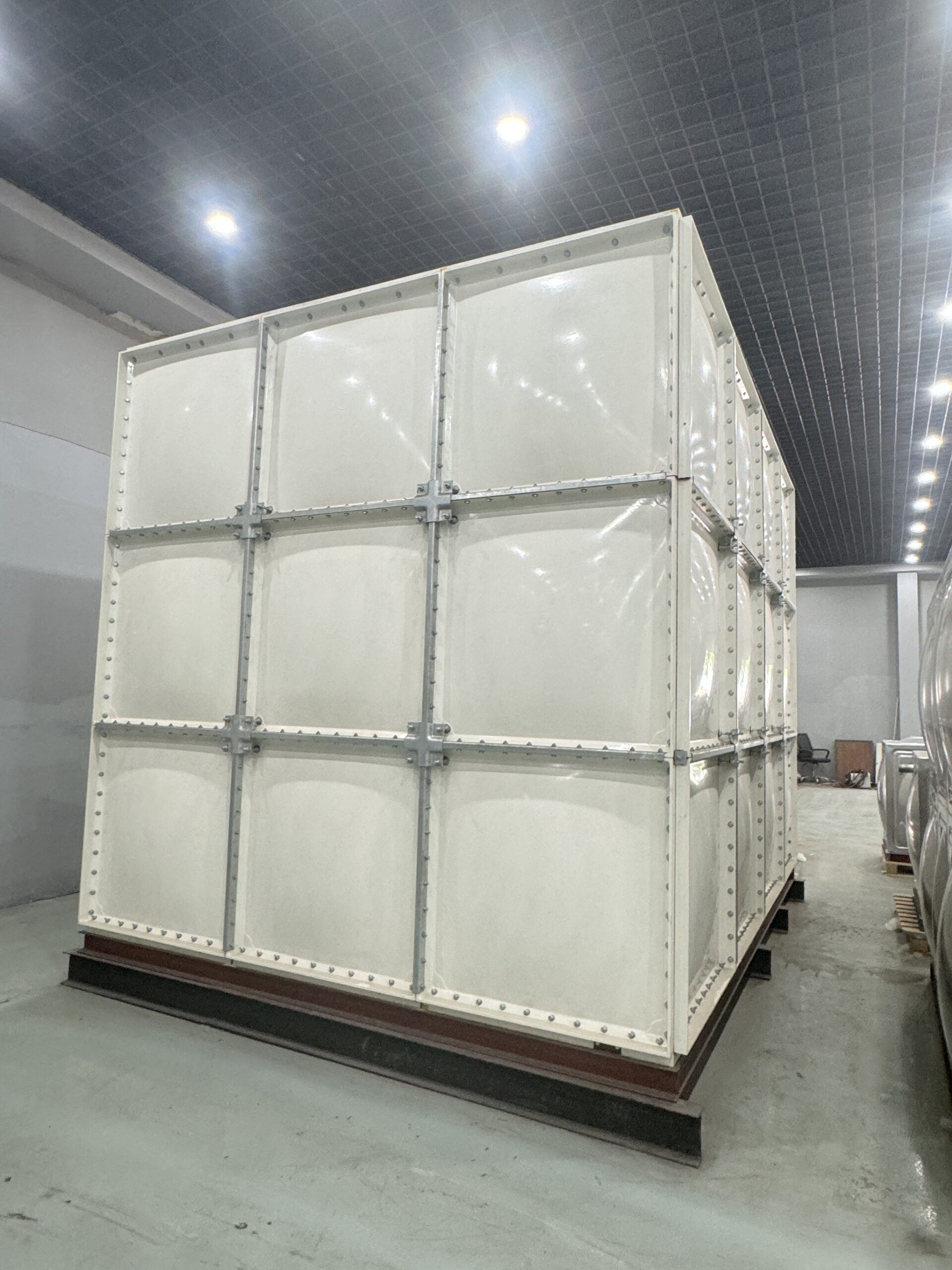
Capacity keywords like 5000 litre water tank and 25000 litre tanks are how most buyers begin a search — but capacity alone does not define a tank. Two 5,000-litre tanks can differ in footprint, height, material, certification and price by a wide margin. This guide explains what to establish alongside the volume so you get a tank that fits and performs.
What 5,000 Litres Actually Looks Like
A 5,000-litre (5 m³) tank is a common size for small commercial buildings, villas, schools and light industrial use. Its physical form depends entirely on the shape chosen:
- A cube — roughly 1.7 m × 1.7 m × 1.7 m of water, plus structure
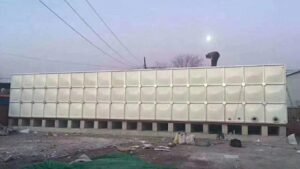
- A low rectangular sectional tank — for example 2.5 m × 2 m at about 1 m water depth, spread out to fit under a ceiling
- A vertical cylinder — roughly 1.8 m diameter by 2 m tall
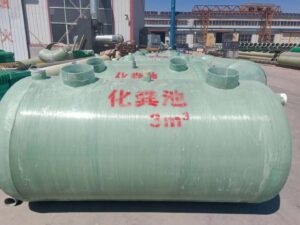
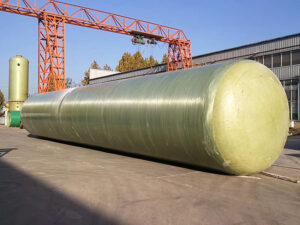
- A horizontal cylinder — a longer, lower profile for plant rooms with limited headroom
Because the modular option lets you trade height for footprint, the most useful information you can give a supplier is not just the volume but the available plan dimensions and height.
Sizing Guide by Application
- Small villa / household — 1,000–5,000 litres for a day or two of domestic storage
- Small commercial / shop / office — 5,000–10,000 litres
- Small apartment block or school — 10,000–25,000 litres
- Hotel or hospital — sized on occupancy and a fire reserve; often 50,000 litres and above
- Fire reserve — not a rule-of-thumb figure; calculated from hazard class, design density and duration
A 25000 water tank (25 m³) typically serves a medium apartment block or a small industrial facility, and is right at the point where a sectional panel tank becomes clearly preferable to a one-piece unit.
Material Choice at This Size
- SMC / GRP panel tank — the default for potable and fire duty above roughly 2,000 litres, especially where access is restricted. Modular, expandable, certified options available.
- One-piece moulded FRP — viable up to roughly 20–30 m³ if the delivery route permits; fewer joints.
- Stainless steel — for hygienic duty or where specified; higher cost.
- Polyethylene — common at small domestic sizes; limited structural capacity and UV performance at larger volumes.
Questions to Answer Before Enquiring
- Required volume — and whether that is total or usable capacity
- Available space: maximum length, width and height
- Access route — door widths, corridor, lift, stair
- Duty — potable, fire, irrigation, process
- Indoor or outdoor, and the ambient temperature range
- Certification required — NSF/ANSI 61, WRAS, or a local scheme
- Insulation needed?
- Connections required — inlet, outlet, drain, overflow, vent, level gauge
- Delivery location and any crane or access constraints
Price Drivers
For a given capacity, price moves with material, wall or panel thickness, resin grade, certification, insulation, the number and type of connections, and the delivery scope (ex-works, delivered, or installed with commissioning). A 5,000-litre certified potable SMC tank and a 5,000-litre non-certified general-purpose tank are not comparable products, however similar the headline capacity looks.
Installation and Commissioning
Confirm base level and load capacity, allow maintenance clearance on all sides, and make sure the tank can actually be drained — a drain valve that is inaccessible or seized will make every future clean a project. For potable duty, clean, disinfect, flush and sample before putting the tank into service.
Need a specific capacity quoted? Send us the volume, available dimensions and duty — we will return a configuration, footprint drawing and delivered price.