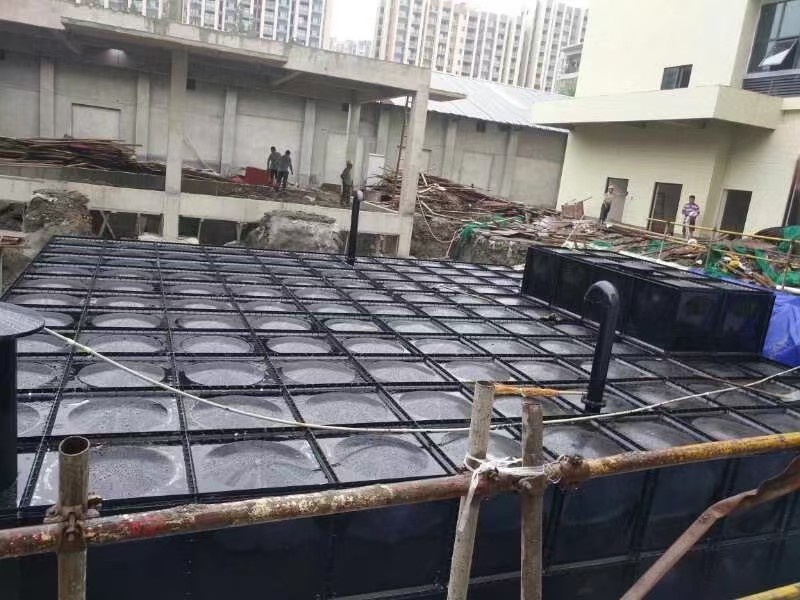
Fire water storage is the one application where a tank’s failure is measured in lives rather than inconvenience. Fire water storage tank requirements are therefore set by code rather than by preference, and the tank must be designed so that the reserve is physically impossible to draw down for any other purpose. This guide covers the sizing logic, the standards involved, material options, and the design details that determine whether a system passes its acceptance test.
Core Principle: Dedicated, Protected Reserve
Fire reserve must remain full and available at all times. The standard ways to guarantee this are:
- A dedicated fire tank, separate from domestic supply
- A divided (compartment) tank with an independent fire suction line and a low-level alarm on the fire compartment
- A vertical-suction arrangement where the domestic outlet draws higher than the fire outlet, so the fire volume cannot be used domestically
Simply putting a domestic and a fire outlet at the same level in one tank is a common and serious design error.
Sizing the Fire Reserve
Capacity is set by the applicable fire code and by the hazard classification of the building. The usual approach:
- Determine hazard classification — light, ordinary or high hazard, which sets the design density and assumed area of operation.
- Calculate sprinkler demand — design density × area of operation × duration (commonly 60 or 90 minutes).
- Add hydrant / hose reel allowance — where hydrants or hose reels are served from the same reserve.
- Apply the duration required by the code — commonly 60, 90 or 120 minutes, sometimes longer for high hazard or for sites with no reliable town main.
- Add allowance for the largest single risk if the code requires it.
The relevant frameworks include NFPA 22 (water tanks for private fire protection), NFPA 13 (sprinkler systems), BS EN 12845 (fixed firefighting systems — automatic sprinkler systems), and local civil defence or fire authority rules, which in many Gulf and Asian jurisdictions override or supplement them.
Material Options for Fire Water Tanks
GRP / FRP sectional tanks
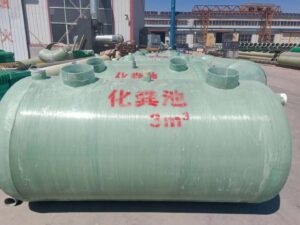
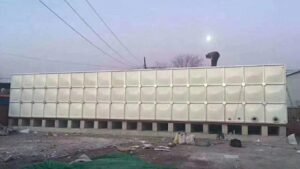
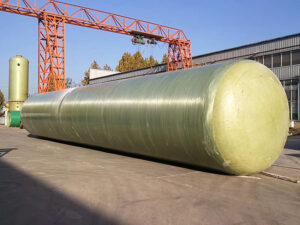
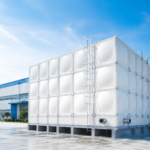
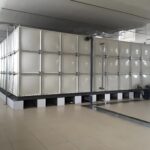
GRP water tanks for fire water are widely specified because they are corrosion-proof, quick to install and can be built inside existing plant rooms. For fire duty, the resin and panel system must be certified for the duty and the tank should include a dedicated fire suction, low-level alarm and a properly sized vent.
Stainless steel sectional tanks
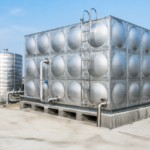
A stainless steel sectional fire water tank (typically 304 or 316L) is chosen where the project specification calls for steel, or where water quality and cleanability requirements are particularly strict. It must be welded and passivated correctly, with attention to the grade’s resistance to the local chloride level.
Concrete and welded steel
Still common for very large reserves. Concrete needs a waterproof lining and is slow to build; welded steel needs durable internal coating and ongoing corrosion management.
Details That Determine Pass or Fail
- Low-level alarm — a signal to the fire panel or BMS when the reserve drops below the design level
- Dedicated suction line — independent of the domestic system, with no shared isolation valve
- Fire-grade gaskets and fasteners — for sectional tanks, specified for the duty
- Vent sizing — adequate for the pump’s maximum flow rate
- Overflow — sized for the maximum fill rate, discharging to a visible location
- Access for inspection — a manway and, for tall tanks, an internal ladder and external access platform
- Seismic bracing where applicable
- Insulation where freezing is possible — including trace heating on exposed pipework
Custom Fire Water Tanks
Custom fire water tanks are frequently needed on retrofit projects where the plant room dictates the tank’s plan dimensions. Sectional construction suits this well: capacity can be achieved in a long, low or irregular footprint, and divided compartments can be created within one shell. For mobile and rapid-response duties, a fibreglass tank built into a fire truck body is a specialist variant, engineered for dynamic loading.
Inspection, Testing and Maintenance
Fire reserves require documented periodic checks. Typical regime: weekly visual and level check, monthly pump and alarm test, quarterly or six-monthly internal inspection, annual full inspection with cleaning, and re-certification at the interval the authority requires. Keep records — at acceptance and at audit, the paperwork is what demonstrates compliance.
Sizing a fire reserve? Send us the building’s hazard classification, sprinkler design density and required duration, and we will calculate the reserve volume, propose a tank configuration and provide a compliance summary against the applicable code.