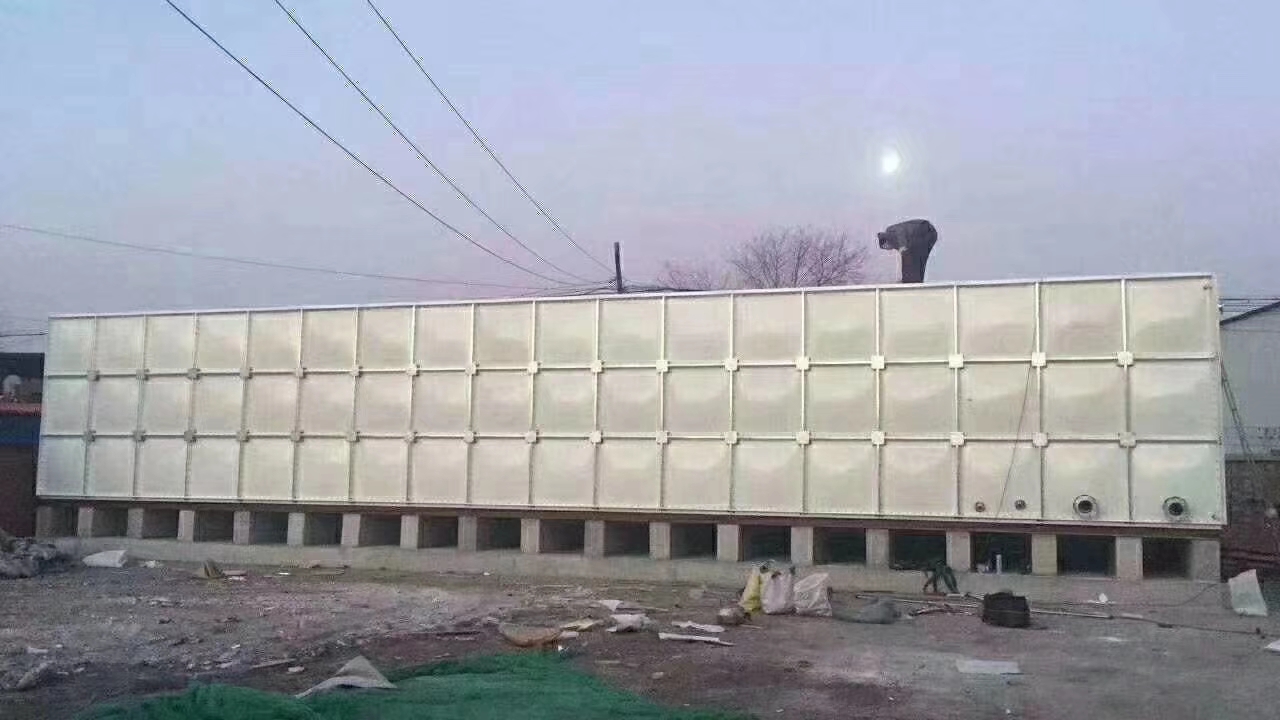
Every potable water storage tank needs cleaning and disinfection — at commissioning, after any contamination event, and on a periodic schedule thereafter. Getting the water tank cleaning procedure wrong is a common source of waterborne illness and of failed water quality audits. This article sets out a practical procedure for cold water storage tanks (CWST), including chlorination dosing, contact time, and the records you should keep.
When to Clean and Disinfect
- At commissioning — before a new or refurbished tank enters service
- After contamination — evidence of ingress, a positive sample, flooding, or any breach of the tank
- After maintenance or repair — any entry, weld or panel work
- Periodically — annually is typical; risk assessments on healthcare and food sites often require more frequent intervals
- After stagnation — a building left unoccupied for an extended period
Before You Start: Safety
Tank entry is confined-space work. Before anyone enters:
- Isolate and lock off the inlet; drain the tank
- Test the atmosphere — oxygen, and for any toxic or flammable gas
- Ventilate continuously with forced air during entry
- Use a harness with retrieval, and a trained attendant outside at all times
- Confirm the permit-to-work system applicable on site
- Never enter a tank alone, and never enter to “rescue” without proper equipment
The Cleaning Procedure
1. Isolate and drain
Close the inlet, arrange the bypass or temporary supply if the building must stay in water, and drain the tank fully through the drain valve.
2. Remove debris and sediment
Remove loose sediment with a wet vacuum or by sweeping to the drain. Do not simply flush sediment into the distribution system.
3. Scrub surfaces
Scrub all internal surfaces — floor, walls, roof underside, stays and ladder — with a disinfectant solution and a non-abrasive pad or brush. Use cleaning agents approved for potable contact. Abrasives damage the smooth surface that resists biofilm, so avoid scouring powders and wire brushes, including on stainless steel.
4. Rinse
Rinse thoroughly with potable water and drain again, removing all cleaning residue.
5. Disinfect (chlorination)
The standard approach is a chlorine dose of about 50 mg/L (ppm) free chlorine, held for a contact period of at least one hour, or a lower dose held longer — follow the applicable national guidance, as requirements differ. Ensure the solution contacts every internal surface, including the roof underside and the underside of the manway cover.
6. Drain and flush
Drain the chlorinated water to a safe disposal point — never to a septic system or a watercourse without verifying the permitted discharge route and dechlorination requirements. Flush with potable water until the chlorine residual matches the incoming supply.
7. Refill and sample
Refill with potable water and take samples for microbiological analysis — typically total coliforms, E. coli and total viable count, at the tank outlet and at sentinel taps. Do not put the tank into service until results are acceptable.
8. Record everything
Log the date, personnel, cleaning agents and doses, contact time, disposal route, and laboratory results, with photographs where useful. This record is what demonstrates compliance at audit.
Water Tank Sterilisation: Alternatives to Chlorine
Chlorine is the default, but alternatives are sometimes preferred:
- Chlorine dioxide — effective against biofilm and Legionella, and less affected by pH
- Hydrogen peroxide / silver — used where a chlorine-free residual is wanted
- Ozone — powerful, but requires on-site generation and has no residual
- Thermal disinfection — hot water at 60 °C or above, applicable to some systems
Confirm that any agent is approved for potable contact in your jurisdiction, and follow the manufacturer’s dose and contact time.
Preventing Recontamination
Cleaning treats the symptom. Preventing recurrence is about tank and system design:
- Sealed, lockable manway covers
- Vent and overflow fitted with insect screens, maintained
- No dead legs — pipework arranged so water circulates
- Insulation on cold water tanks to keep temperature down, which limits bacterial growth
- Drain valve that actually works — a seized drain makes every future clean difficult
- Annual inspection with photographic record
CWST Cleaning and Disinfection: Documentation
A complete handover pack should include the risk assessment and method statement, confined-space permits, COSHH assessments for the chemicals, the disinfection dosing calculation, disposal records, laboratory certificates, and a written recommendation for the next inspection date.
Need a tank cleaned and certified? Tell us the tank type, capacity and location — we will provide a method statement, carry out the clean and disinfection, and issue the full documentation pack with laboratory results.