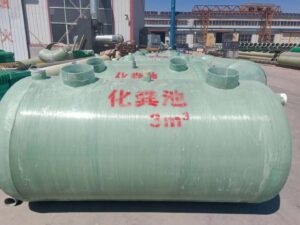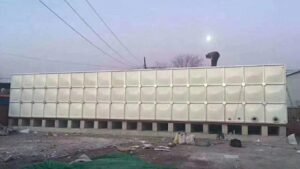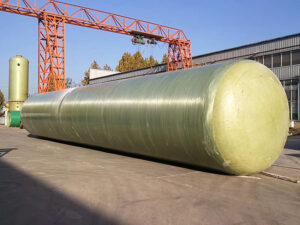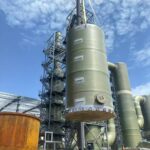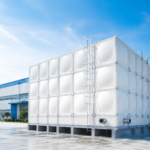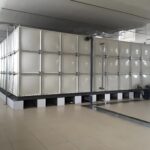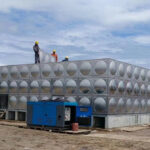
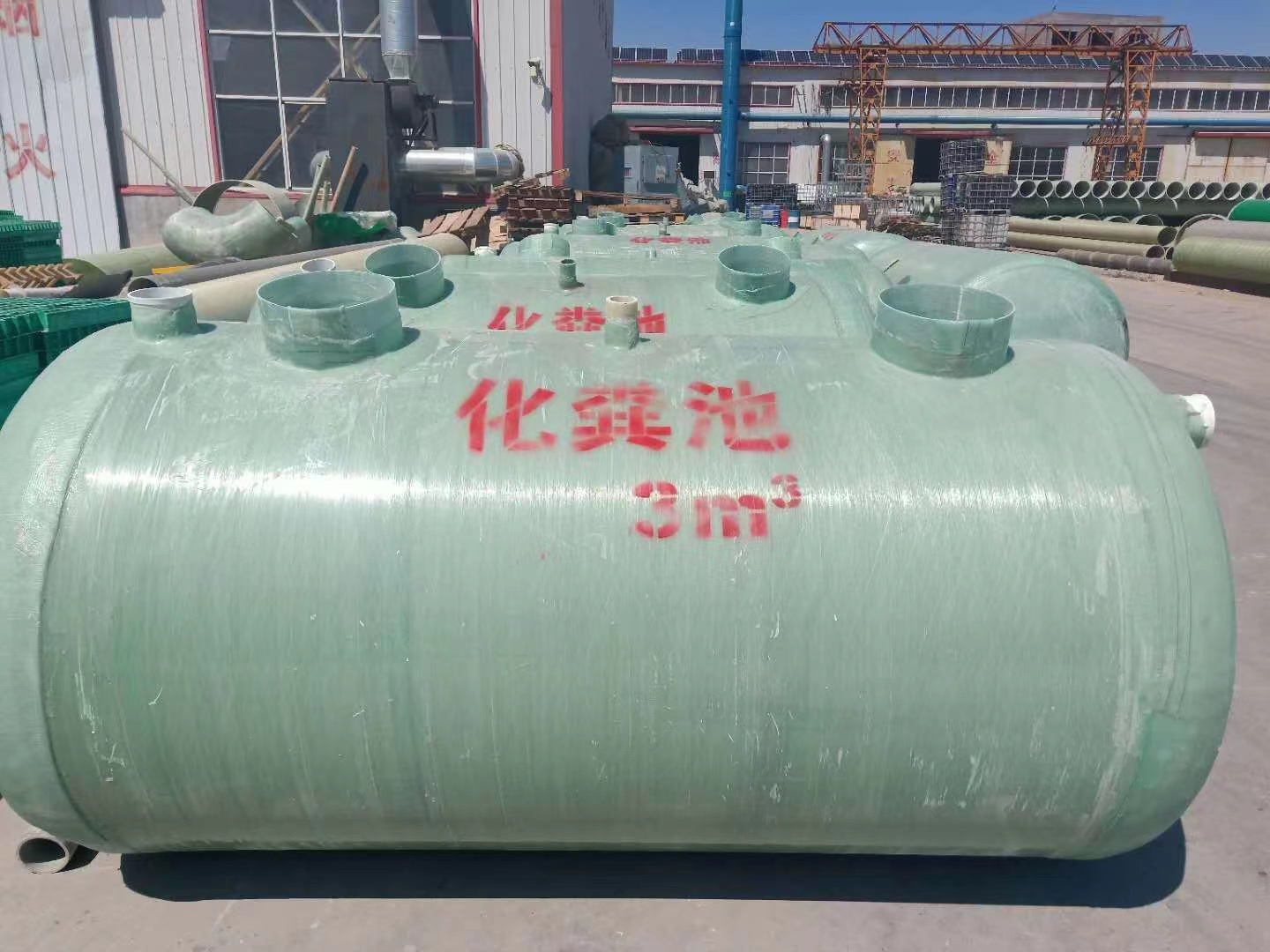
SMC septic tank manufacturing applies the same compression-moulding technology used for modular water tanks to below-ground wastewater treatment. For sites without mains sewerage — rural housing, resorts, highway rest areas, temporary camps — an SMC septic tank offers a factory-controlled, corrosion-proof alternative to brick-and-mortar soakaways or site-built concrete chambers.
Why SMC for Septic Tanks
Septic environments are aggressive: hydrogen sulphide, organic acids, and a permanently wet, anaerobic interior. Traditional materials each have a failure mode — concrete carbonates and cracks, steel corrodes, and polyethylene can deform under soil load. SMC avoids all three.
- Chemical resistance — the polyester matrix resists H&sub2;S and septic effluent across the full pH range encountered in practice.
- Watertight shell — moulded in one piece or in sealed bolted sections, so there is no seepage in or groundwater ingress out.
- Structural stiffness — ribbed mouldings handle soil and traffic loads when backfilled to specification.
- Lightweight — two people can position a domestic unit without a crane, which matters on remote sites.
- Fast installation — excavate, bed, set, backfill, commission — often in a single day.
How an SMC Septic Tank Works
A septic tank is a primary treatment device: it separates solids, retains them, and allows anaerobic digestion to reduce volume. Effluent then flows to a secondary stage — a soakaway, leach field, or a packaged treatment unit.
- Inlet baffle — slows incoming flow and prevents short-circuiting.
- Settling chamber — solids settle as sludge; fats and oils float as scum.
- Outlet baffle / filter — retains suspended solids so only clarified liquid leaves the tank.
- Access risers — for inspection and desludging, extendable to finished ground level.
Sizing
Capacity is driven by occupancy and by the desludging interval you can commit to. Undersizing is the most common cause of premature failure — solids carry over into the drainage field and clog it permanently. A practical approach:
- Small household (up to 5 people): 1,000–1,500 litres minimum
- Medium household (6–10 people): 2,000–3,000 litres
- Small commercial / resort blocks: sized on peak daily flow plus a retention allowance, typically 24–48 hours
Many regulators specify a minimum retention time rather than a volume. Confirm the local rule before ordering — it varies considerably between jurisdictions.
Installation Essentials
- Excavation — allow working clearance all round; the hole must be large enough to compact backfill properly.
- Bedding — a level sand or fine-gravel bed, compacted, so the shell bears uniformly. Never bed on rock or on large stones.
- Backfill — selected fine material placed in layers and compacted; for traffic areas, confirm the required cover depth or specify a load-distributing slab.
- Water table — in high groundwater, an empty tank can float. Either ballast with water as you backfill or specify anchoring.
- Ventilation — a vent pipe is required for gas release and for proper flow.
- Invert levels — check inlet and outlet falls before backfilling; correcting them afterwards is expensive.
Operation and Maintenance
A septic tank is not fit-and-forget. Desludging is typically needed every 1–3 years depending on load and volume. Avoid discharging fats, oils, wet wipes, sanitary products, solvents or antibiotics into the system — these either accumulate or kill the bacterial population that does the digesting. Keep a simple log of desludging dates; it is also frequently required by local environmental authorities.
Choosing an SMC Septic Tank Manufacturer
Look for a manufacturer that moulds in-house and can evidence: resin grade suitable for sewage service, shell stiffness / load rating with the engineering basis stated, watertightness test results, access and riser options matching your cover depth, and spares availability for lids, baffles and seals. A supplier that also manufactures potable SMC panels will generally have better process control than one moulding only occasional septic units.
Planning an off-mains site? Tell us the occupancy, peak daily flow and soil conditions, and we will size the tank, specify the drainage field loading rate, and provide installation drawings.