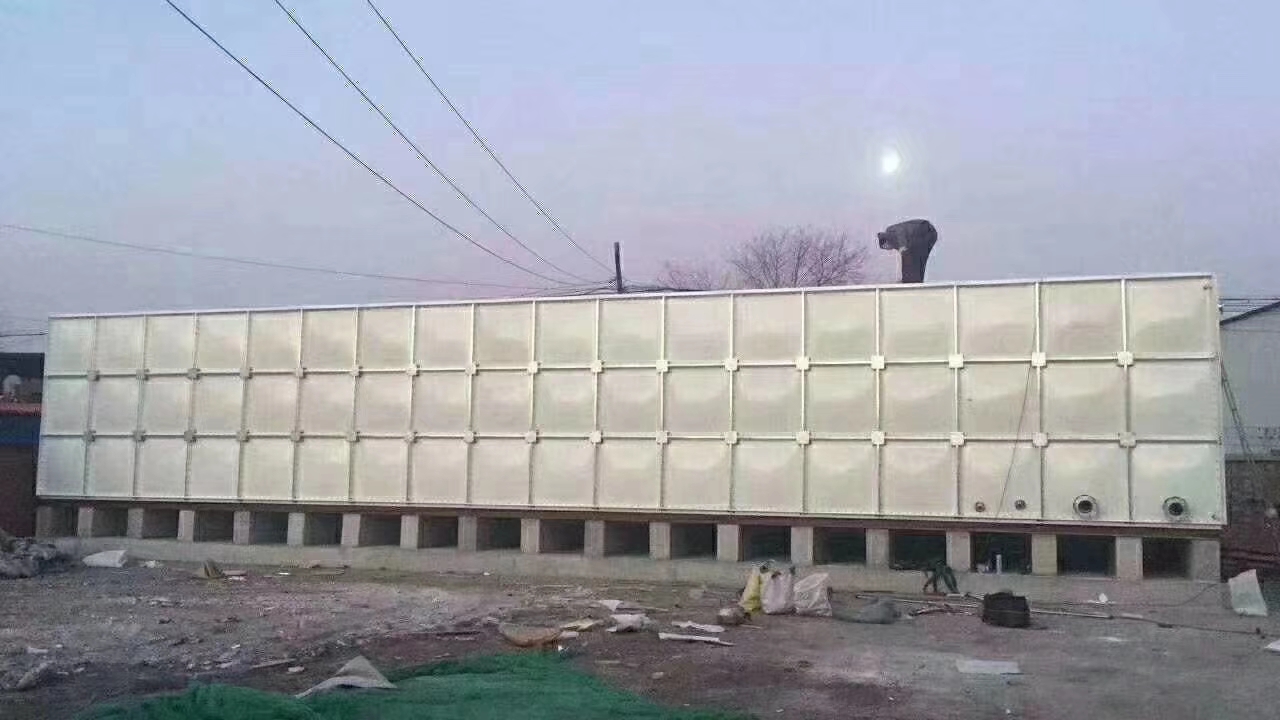
An FRP water tank (Fibre Reinforced Plastic) is a storage vessel built from glass fibre reinforcement set in a thermoset resin matrix. FRP tanks dominate commercial water storage wherever corrosion, weight or hygiene rules out plain carbon steel, and wherever concrete is impractical because of access or load limits. This guide explains the construction types, how to read a specification, what FRP actually costs to own, and how to select a manufacturer.
What “FRP Water Tank” Actually Covers
FRP is an umbrella term, so the same phrase is used for three quite different products:
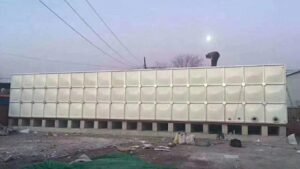
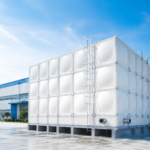
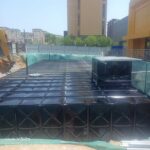
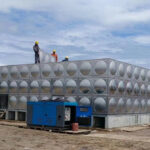
- FRP panel tanks — flat moulded panels (often SMC or GRP) bolted into a sectional tank on site. Modular, expandable, and the only realistic option when the tank must pass through a doorway.
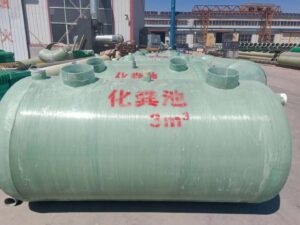
- One-piece moulded tanks — factory-built cylindrical or rectangular units delivered whole. Typical up to roughly 20–30 m³, beyond which transport becomes the constraint.
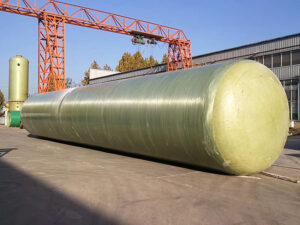
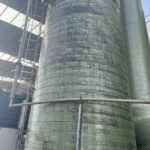
- Filament-wound vessels — machine-wound cylinders for pressure duty, process storage and chemical service.
If your tender simply says “FRP water tank”, the bid you get back may be any of these. Always state the construction type you want.
Materials: Resin and Glass
Performance is set by two choices — resin grade and glass loading.
- Orthophthalic polyester — lowest cost, adequate for many non-potable duties.
- Isophthalic polyester — better hydrolysis and chemical resistance; the usual baseline for potable water.
- Vinyl ester — highest chemical and temperature resistance; specified for aggressive process fluids and many chemical storage duties.
- Food-grade / potable resin — required for drinking water, with certification evidence (NSF/ANSI 61, WRAS, or the relevant national scheme).
Glass comes as chopped strand mat, woven roving, or continuous roving for filament winding. Glass content by weight typically runs 25–40% depending on process. Higher glass content raises stiffness and strength but only up to the point where the resin can still fully wet out the fibre — dry glass is a defect, not a strength feature.
Why Specifiers Choose FRP Over Steel and Concrete
- No corrosion — no internal coating, no cathodic protection, no rust staining in potable water.
- Weight — roughly a quarter to a third of the weight of an equivalent steel tank, which cuts foundation, transport and crane costs.
- Hygiene — smooth non-porous internal surfaces resist biofilm; easy to clean and disinfect.
- Design freedom — moulded ribs, integral baffles, custom nozzle positions and divided compartments are straightforward.
- Service life — 25–30 years is standard with routine inspection.
Reading an FRP Water Tank Specification
A usable specification should state, at minimum:
- Volume and dimensions — nominal capacity plus actual usable volume (allow for the freeboard and for the dead volume below the outlet).
- Design water depth — drives panel or wall thickness.
- Resin system — grade plus potable certification if applicable.
- Construction type — panel / one-piece / wound.
- Design codes — BS EN 13280, AWWA D120, ASTM D3299 or the relevant national standard.
- Nozzles and connections — sizes, positions, material (usually 304/316 stainless or PVC).
- Access — manway size and location; a 600 mm manway is the practical minimum for internal cleaning.
- Insulation and cladding — for outdoor tanks, especially where condensation or heat gain matters.
- Testing — hydrostatic test duration and acceptance criteria.
- Warranty — period and exclusions.
Applications
- Potable water storage for apartments, hotels, hospitals and schools
- Fire protection reserve (hydrant and sprinkler)
- Process and raw water in manufacturing
- Rainwater harvesting and irrigation
- Cooling tower make-up and chilled water buffer
- Chemical and effluent storage, with a resin upgrade
Selecting an FRP Water Tank Manufacturer
The market includes dedicated moulders and trading companies that subcontract. Before you award, verify:
- In-house production — can you see the plant, or at least an audit report and production photos?
- Material traceability — batch records for resin and glass, plus Barcol hardness and thickness reports.
- Potable certification — for the actual formulation supplied, not a generic certificate.
- Type testing — hydrostatic test evidence for the model you are buying.
- Reference projects — comparable size and duty, ideally in your region.
- Spares and aftercare — gaskets, bolts, replacement panels available long term.
- Export capability — if shipping, confirm panel packing, container loading and documentation support.
Installation and Maintenance Essentials
FRP tank installation is quick, but the base must be flat and level — uneven support is the leading cause of joint leakage in sectional tanks. After the first fill, re-torque bolts; repeat at 12 months. Plan annual internal inspection plus cleaning and disinfection at commissioning and after any contamination event. Inspect external insulation, the overflow screen and the vent insect screen at the same visit.
Frequently Asked Questions
What is the difference between FRP and GRP?
Both describe glass fibre in a resin matrix. GRP (Glass Reinforced Plastic) is the UK/European term; FRP (Fibre Reinforced Plastic) is the US/Asian term. In the water tank industry they are effectively interchangeable.
Can FRP tanks be used for drinking water?
Yes, provided the resin system is certified for potable contact. Always request the certificate for the specific formulation.
How long does an FRP water tank last?
25–30 years is typical. Gaskets and fasteners are the wear items and are replaceable without draining the whole system in most designs.
Requesting a quote? Send your volume, footprint, water duty and available access dimensions — we will return a specification, panel or shell schedule and a delivered price.