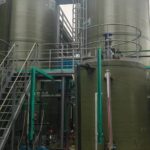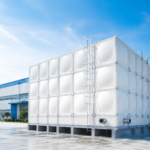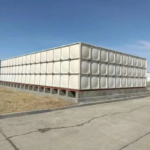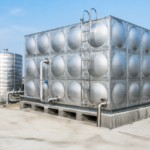
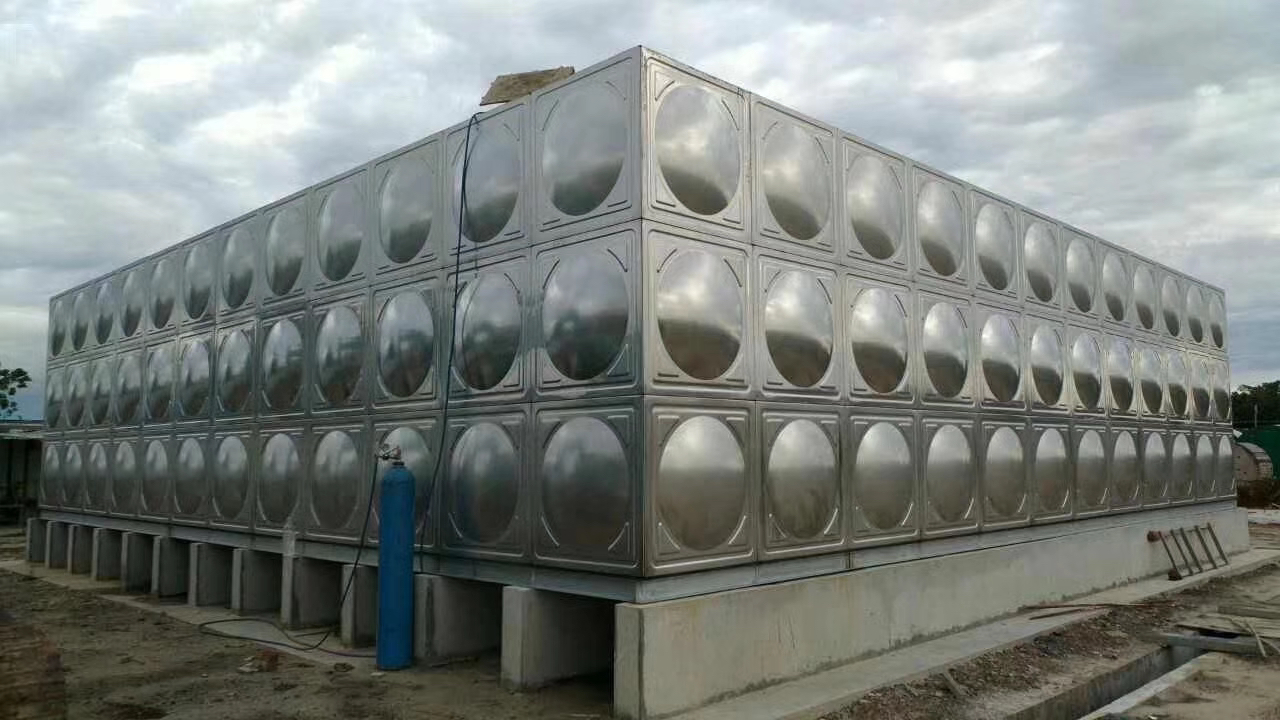
A stainless steel water tank is specified where hygiene, cleanability and long-term dimensional stability matter more than initial cost. For hospitals, food and beverage plants, pharmaceutical facilities and premium commercial developments, stainless is often written into the specification by default. This guide covers the grades that matter, when custom design is worth paying for, and the fabrication details that separate a tank that lasts thirty years from one that stains within five.
Choosing the Right Grade
Grade selection drives both performance and price:
- SUS 304 (1.4301) — the standard austenitic grade for potable water. Good corrosion resistance in most municipal water supplies and indoor environments. The most common choice for a SUS 304 water tank.
- SUS 316L (1.4404) — molybdenum-bearing, substantially better resistance to chlorides. Specified for coastal locations, for water with higher chloride content, and for pharmaceutical and high-purity applications.
- Duplex 2205 — higher strength, allowing thinner plate; used for large or aggressive-duty tanks where the strength-to-cost ratio works.
A frequent and expensive mistake is specifying 304 for a coastal project or for water with elevated chlorides. Chloride-induced pitting and stress corrosion cracking are the two failure modes that most often end a stainless tank’s life early.
Sectional vs One-Piece Construction
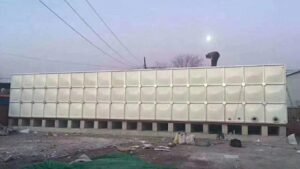
- Sectional (panel) tanks — factory-formed panels bolted on site with food-grade gaskets. The only practical option for large volumes or restricted access, and the standard configuration for fire reserve.
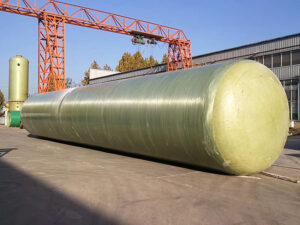
- One-piece welded tanks — delivered whole; fewer joints, so fewer potential leak paths, but limited by transport dimensions.
Custom Stainless Steel Tank Design
Custom stainless steel tank design is worth the engineering effort when any of the following apply:
- The plant room fixes the plan dimensions, so the tank must be long, low or L-shaped
- The tank must combine duties — for example a divided potable and fire compartment in one shell
- Process integration is required: specific nozzle positions, baffles, agitation, CIP spray balls, or jacketing
- Hygiene standards demand crevice-free welds, sloped floors for full drainage, and polished internal finishes
- Load or seismic conditions are unusual
For high-specification hygienic duty, expect to specify surface finish (for example 2B, or a polished finish for pharmaceutical use), weld finish (ground flush and passivated), and full drainability.
Fabrication Quality: What to Inspect
Stainless tanks fail at the welds, not in the plate. The essentials:
- Correct filler metal — matched to the parent grade
- Shielding gas control — poor purging causes “sugar” or heavy oxidation on the weld’s inside face; this is a corrosion initiation point
- Passivation — removal of free iron and restoration of the chromium oxide layer after welding; without it, surface rusting is likely
- No crevices — lap joints and unsealed gaps trap moisture and lead to crevice corrosion
- Distortion control — excessive heat input warps panels and makes sealing difficult
Ask for weld procedure specifications, welder qualifications, and evidence of passivation. These are the documents that distinguish a professional fabricator.
Applications
- Potable water storage in hospitals, hotels and premium residential towers
- Food and beverage process water and product storage
- Pharmaceutical purified water and WFI distribution storage
- Fire protection reserve (sectional stainless is common for this)
- Rainwater harvesting and irrigation
Cost Considerations
Stainless costs more than GRP or SMC up front, sometimes significantly. The justification is usually one of three things: a specification that requires it, a duty where cleaning and disinfecting is frequent and aggressive, or a client willing to pay for the longest achievable service life. Where none of those apply, GRP or SMC generally gives better value.
Maintenance
Stainless is low-maintenance but not immune. Inspect welds and gasketed joints annually, check for tea-staining or pitting in coastal or chlorinated environments, keep the tank clean and disinfected on the same schedule as any potable tank, and never use carbon steel tools or wire brushes on stainless surfaces — embedded iron particles will rust.
Specifying a stainless tank? Send us the duty, water analysis (especially chloride), dimensions and access constraints — we will recommend a grade, panel or shell design and a fabrication specification.