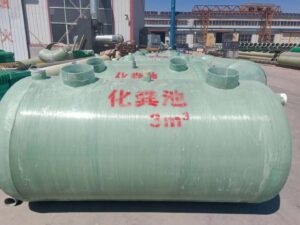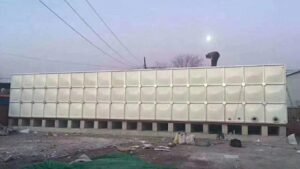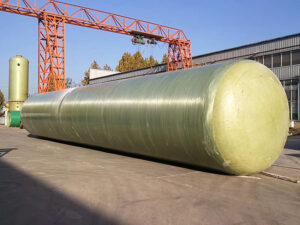
Most problems in FRP tank procurement are specification problems: two bidders quote to different standards, the cheaper one wins, and the shortfall surfaces during commissioning. A tight FRP water tank specification makes quotes comparable and gives you something to inspect against. This article sets out the clauses that matter and provides a practical checklist for buyers.
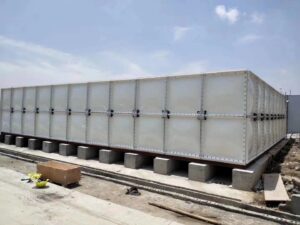
Specification Checklist for Water Storage
1. Capacity and geometry
- Nominal volume and the basis — total capacity vs usable (between the outlet and the overflow)
- Plan dimensions and height, with tolerances
- Design water depth — this drives panel or wall thickness
- Freeboard — the margin between the maximum water level and the roof
2. Duty and contents
- Potable, fire reserve, process, rainwater or chemical
- Water analysis where available — chloride, pH and hardness matter for material selection
- Operating temperature range
3. Construction
- Type — sectional panel, one-piece moulded, or filament-wound
- Panel schedule — thickness by course, for sectional tanks
- Glass content and reinforcement form
- Resin grade — ortho, iso or vinyl ester
- Corrosion liner — thickness and veil type
4. Standards and certification
- Design code — BS EN 13280, AWWA D120, ASTM D3299 or the local equivalent
- Potable certification — NSF/ANSI 61, WRAS, BS 6920 or the national scheme, covering the actual formulation
- Fire authority approval where a fire reserve is involved
5. Connections and accessories
- Nozzle schedule — size, rating, material (304/316 stainless or PVC) and position for each: inlet, outlet, drain, overflow, vent
- Manway — minimum 600 mm, with a lockable, sealed cover
- Level indication — gauge, transmitter, and low/high level alarms
- Internal and external access — ladder, platform, handrail
- Insulation and cladding — material, thickness, and external finish
- Screens on vent and overflow
6. Structural and site conditions
- Wind load and seismic zone
- Base type — concrete plinth or steel skid
- Indoor or outdoor, and UV exposure
- Ambient temperature range, and freezing risk
7. Testing and documentation
- Hydrostatic test — head, duration (commonly 24 hours) and acceptance criterion
- Material certificates for resin and glass
- Barcol hardness and thickness records
- Dimensional report
- O&M manual, panel schedule drawing, and spares list
- Warranty — duration and exclusions
Inspection Checklist: What to Check on Delivery and After Install
An inspection checklist turns the specification into something enforceable:
- Panel count and sizes match the panel schedule
- No visible damage — cracks, chipped flanges, delamination
- Surface finish smooth, no porosity or exposed glass
- Gasket material and quantity as specified
- Fastener material matches the specification (stainless vs galvanised)
- Stays and tie rods present and correct for the tank height
- Nozzles in the specified positions, before assembly
- Manway size adequate for internal cleaning access
- Base level and full bearing verified before panel laying
- Bolt torque applied progressively and to the specified figure
- Hydrostatic test held for the full duration, with records
- Cleaning and disinfection completed; water sample results received
Reading a Quotation: Where the Differences Hide
Two quotes for “the same” tank can differ by 30% for reasons that are invisible in the summary line. Check:
- Resin grade — ortho vs iso vs vinyl ester is a real cost and performance difference
- Panel thickness — thinner panels for the same height means a shorter life
- Certification — a certified potable resin costs more
- Insulation — included or excluded
- Scope — ex-works, delivered, or installed; is commissioning and disinfection included?
- Spares — spare gasket set included or not
- Warranty — length and what it excludes
Ask every bidder to price against the same written specification. That is the only way a comparison is meaningful.
FRP Tank Procurement: Practical Sequence
- Define duty, capacity and site constraints
- Issue a written specification using the clauses above
- Evaluate bidders on evidence — in-house manufacturing, test reports, certification and references
- Compare quotes line by line against the specification
- Inspect at delivery and during installation against the checklist
- Hold retention until the hydrostatic test and water sample pass
Issuing an enquiry? Send us the capacity, site dimensions and duty — we will return a complete written specification you can issue to all bidders, plus our own quotation against it.